


Dandruff, also known as pityriasis capitis, is a common condition that presents with a scaly and flaky scalp. If the scalp is also red and irritated, then the dandruff is caused by seborrheic dermatitis. The two conditions are interchangeable and treated similarly.
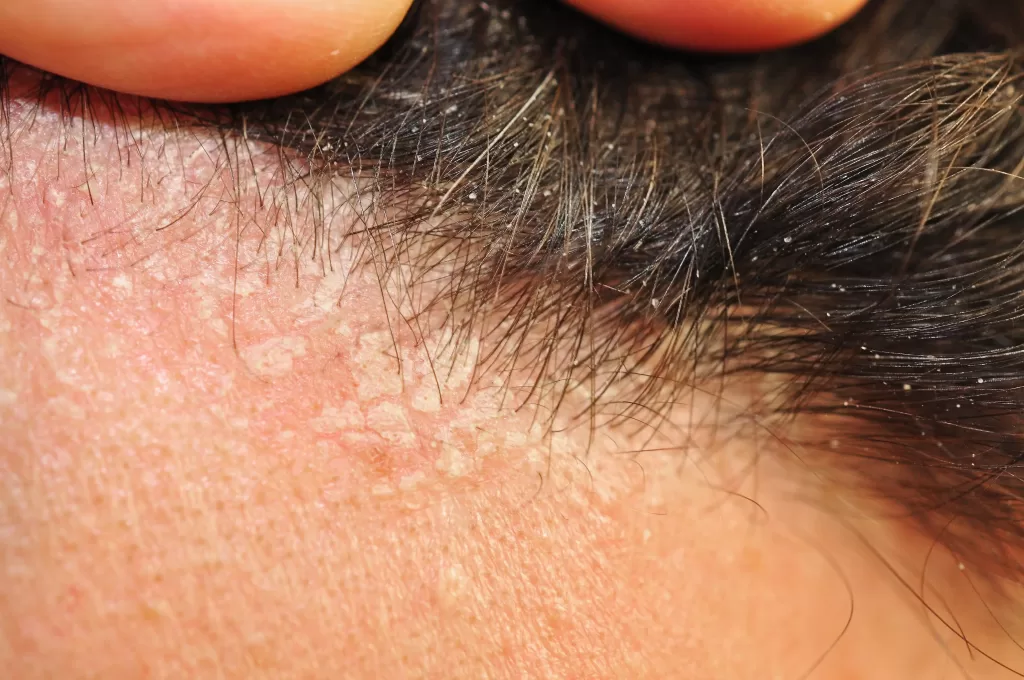
Symptoms of dandruff
The main symptoms of dandruff are:
- Flaky skin that sheds in clumps
- Itchy scalp
- White flecks on dark clothes
Causes of dandruff
Dandruff occurs when the normal shedding of the scalp skin is impaired, leading to skin cells sticking together and shedding as lumps.
Seborrheic dermatitis and related symptoms
If you have seborrheic dermatitis, you may also have symptoms in other areas of your body like your eyebrows, beard, or laugh lines (nasolabial folds). The affected areas may have a thickened, yellow crust. Seborrheic dermatitis is caused by Malassezia yeast, which is normal on the skin but overgrows in people with the condition.

Prevalence and risk actors
Dandruff affects about 50% of the population at some time in their life but is generally more common in:
- Men
- Oily hair
- Emotional distress, poor sleep, stress
- Older age
- Other medical conditions, such as Parkinson’s disease, HIV, eczema
- Colder climates
- Family history
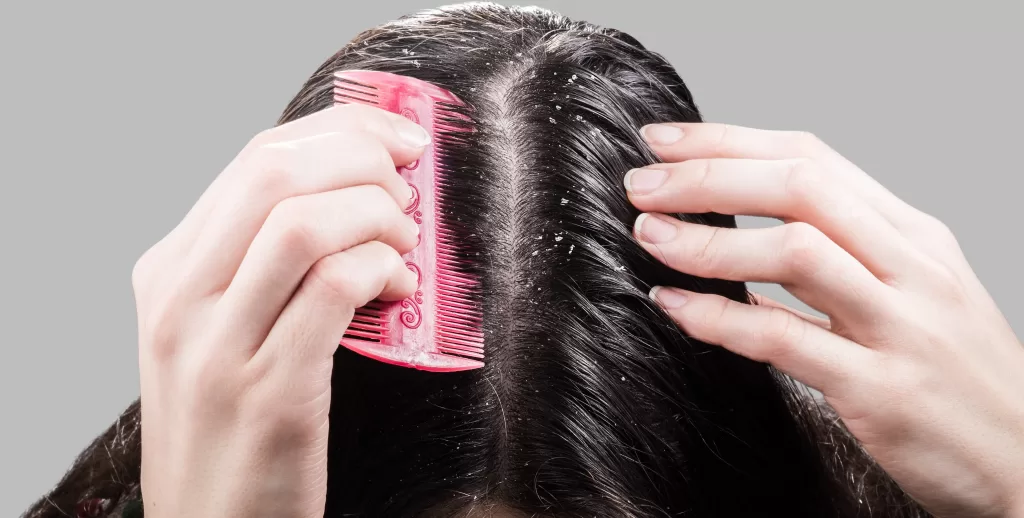
Diagnosis of dandruff
The diagnosis of dandruff is usually done with an examination, but if your doctor considers another diagnosis, such as tinea or psoriasis, you may require a swab or skin biopsy.
Treatment options for dandruff and seborrheic dermatitis
Dandruff is hard to cure but can be manageable. Treatment for dandruff and seborrheic dermatitis overlap, with common recommended therapies including:
- Zinc pyrithione shampoo, which has antibacterial and antifungal effects
- Selenium sulfide shampoo, which is an antifungal that controls how much the skin sheds
- Piroctone olamine shampoo (antifungal)
- Ketoconazole shampoo (antifungal)
- Tar shampoo, which has antimicrobial, anti-itch, and skin shedding effects
- Salicylic acid shampoo, which loosens the top layer of shedded skin
- Topical corticosteroid lotions, which can provide symptomatic relief of itch
Each shampoo or lotion has its own directions on how often they should be used. Dandruff is not always able to be cured, but it can come and go depending on many factors, and often a mix of these shampoos or lotions is necessary to get the desired result.
When to seek medical advice
If your dandruff is hard to control or is leading to distress, speak to your doctor. You may need expert advice from a dermatologist.
Sinus Infection: Symptoms, How Long It Lasts, and When You Need a Doctor
Sinusitis, often called a sinus infection, is one of the most common reasons Australians start to feel wretched for a week or two after a cold. The good news is [...]

Can You Get a Free Medical Certificate in Australia?
An honest answer from a GP: mostly no, but there are some genuinely free routes, and they are worth knowing about. This page explains where free or bulk-billed certificates really exist, why online [...]

Can You Get a Medical Certificate from a Pharmacy or Chemist Warehouse?
Pharmacy Medical Certificates in Australia: Rules, Limits and Costs If you wake up unwell and need proof for work, the local pharmacy can sometimes help. Pharmacists in Australia can [...]

Medically reviewed by Dr Aifric Boylan
MB · BCH · BAO · MICGP · FRACGP · DRCOG · DCH
About Dr Aifric Boylan MB BCh BAO MICGP FRACGP DRCOG DCH Fellow of the Royal Australian College of General Practitioners, Dr Aifric Boylan is a general practitioner with more than 20 years' experience. She graduated in medicine from…
This health information has been clinically reviewed by an Australian doctor. Qoctor health pages are reviewed to support clear, evidence-informed guidance; they do not replace individual medical advice.
Telehealth is not suitable in all medical situations — patients will be advised if an in-person assessment is needed. In an emergency, call 000.