


What is Quinsy?
- Quinsy occurs when an abscess forms at the top of one of the tonsils
- An abscess is a collection (or bag) of pus
- The tonsils are the 2 lumps you can see in your throat when you open your mouth wide
- They sit in the bottom corners at the back (behind your tongue)
- They are either side of the dangly “uvula” which hangs from the top
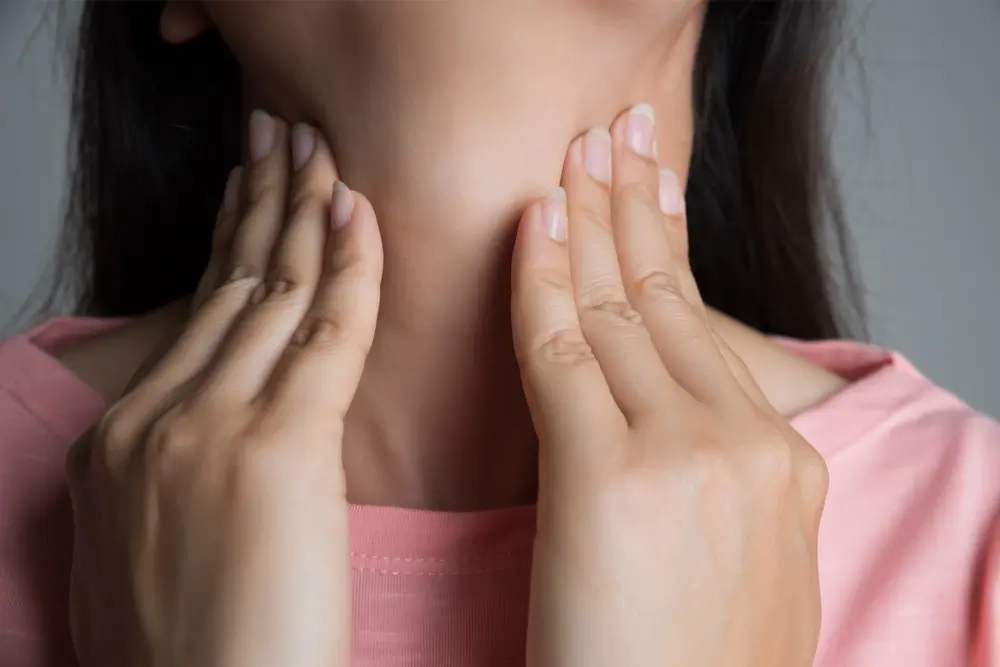
What are the symptoms of Quinsy?
- Worsening sore throat
- Feeling unwell
- Significant difficulty swallowing
- Smelly breath
- Usually a fever (high temperature)
- Usually the glands are up in your neck
- Sometimes earache
- Sometimes difficulty opening the mouth wide
- Sometimes it causes you to speak with a strange voice, sounding like you have a golf ball in your mouth
What does Quinsy look like?
- The tonsil that has the abscess will look large, often pushing the uvula (which normally dangles in the middle) off to one side
- The uvula itself may look swollen
- Your mouth may look “yucky” or unclean
Who gets Quinsy?
- Quinsy starts during tonsillitis
- It’s commoner in people who get tonsillitis recurrently
- It happens to between 1 and 4 in 10,000 people per year
- Tonsillitis is when your tonsils become swollen, inflamed and painful
- This is usually caused by bacteria or viruses
- People with tonsillitis can therefore progress to developing quinsy
- Anybody can develop quinsy. Certain people are more likely to get it:
What causes Quinsy?
- Bacteria responsible for tonsillitis (usually Streptococcus or Haemophilus species) form an abscess on a tonsil
- It’s not known why this happens
What is the treatment for Quinsy?
- You need to go to hospital urgently, as it’s important that quinsy is treated before it affects your breathing
- Antibiotics given intravenously (in a drip, usually into your arm)
- You’ll usually be given intravenous fluids as well (for dehydration)
- Sometimes steroids are given – these have been shown to help
- The abscess will usually be drained by a doctor, using a scalpel (sharp surgical knife) or a needle
- Usually the area is numbed first using a spray
- Some people have a general anaesthetic for this (surgery after being put to sleep)
Can I die of Quinsy?
- Yes, though this extremely rare if you are treated in hospital
- Outcomes are usually excellent if the right treatments are given
What’s the prognosis for Quinsy?
- Outcomes are generally very good
- You usually need to have your tonsils surgically removed (tonsillectomy) a few weeks after you’ve recovered to prevent it from happening again
Article Resources


A Decade of Telehealth Medical Certificates- what we’ve learned.
For more than a decade, Qoctor has been providing medical certificates via telehealth to hundreds of thousands of Australians. During that time, the telehealth landscape has evolved rapidly. Many new providers have entered [...]

Why Choose Qoctor for an Online Medical Certificate?
When you’re unwell, the last thing you need is extra stress trying to organise a medical certificate. Online options are super convenient- but it is important to choose wisely, as some are more [...]

Weight loss programs: how to choose the right option in Australia
Why many Australians choose Qoctor for weight loss support At Qoctor, we’re transparent about how our approach works, so people can decide whether it’s the right fit for them. Many Australians value weight [...]

Medically reviewed by Dr Aifric Boylan
MB · BCH · BAO · MICGP · FRACGP · DRCOG · DCH
About Dr Aifric Boylan MB BCh BAO MICGP FRACGP DRCOG DCH Fellow of the Royal Australian College of General Practitioners, Dr Aifric Boylan is a general practitioner with more than 20 years' experience. She graduated in medicine from…
This health information has been clinically reviewed by an Australian doctor. Qoctor health pages are reviewed to support clear, evidence-informed guidance; they do not replace individual medical advice.
Telehealth is not suitable in all medical situations — patients will be advised if an in-person assessment is needed. In an emergency, call 000.