


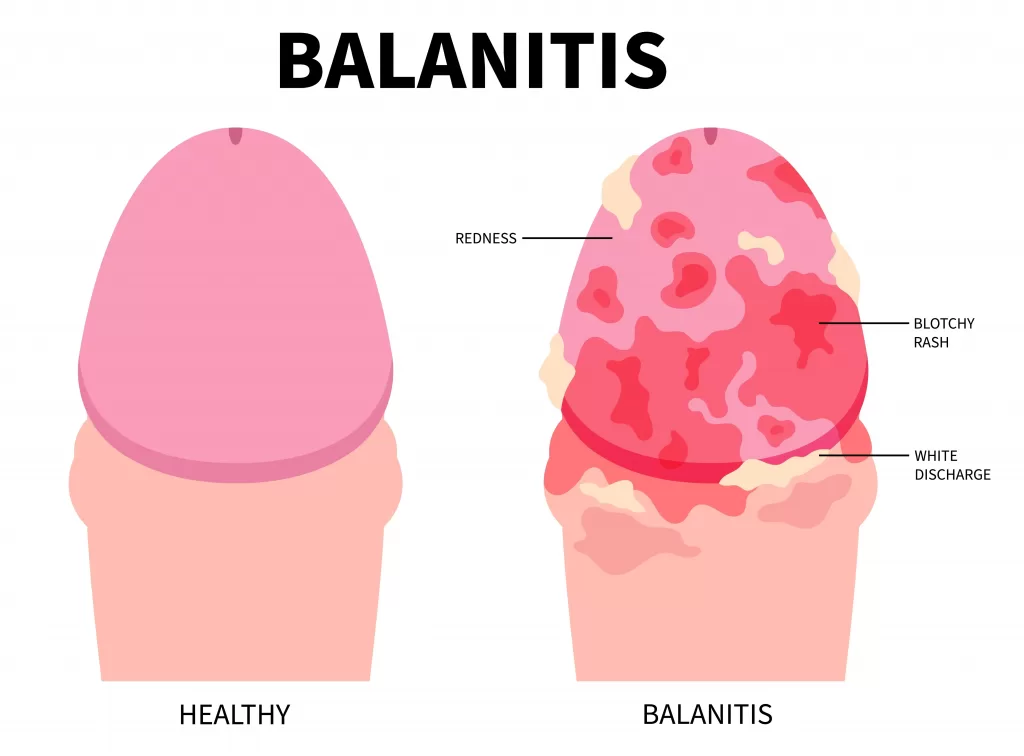
Balanitis is inflammation of the head of the penis (glans). It can cause symptoms such as irritation of the glans, redness, discomfort, swelling, small spots or discharge that is white and thick (or cheesy).
There are many causes of balanitis, including dermatitis, irritants, fungal infection, bacterial infection, physical rubbing, yeast infection, poor hygiene, and also overzealous cleaning. When the cause is a candida yeast, balanitis is often called male thrush – the same organism behind vaginal and oral thrush.
Risk factors for balanitis
Balanitis is much more likely to occur in men who are uncircumcised because the glans is covered by the foreskin, which creates a moist, closed, and warm environment for bacteria and fungi to overgrow.
Balanoposthitis: A related condition
Another condition, balanoposthitis, means inflammation of the foreskin and glans, which has the same triggers and causes as balanitis.
Common triggers and causes of balanitis
- Diabetes: Particularly if your diabetes is poorly controlled, because the high amount of sugar in your blood allows fungi and bacteria to overgrow, plus your immune system is not able to function as well as usual.
- Soaps and shower gels: These clear all the good oil from the genitals, leaving the skin dry, irritated, and without the natural oil to protect it from bacteria and fungi that naturally live on the skin. The warm water in the shower also removes good oil from the skin, so after you leave the shower and dry with a towel, the skin has been stripped of all its protection.

- Phimosis: A tight foreskin that does not fully retract can trap urine and smegma (normal penile lubricant), creating a moist environment that irritates the head of the penis and can trigger balanitis.
- Oral antibiotics: Can affect the normal bacteria on the body, leading to an overgrowth of fungus or yeast on the penis, also known as “male thrush”, to develop.
- Irritation of the glans: Lubricants, cleansers, loofahs, latex, washing powders, sex, obesity, and other chemicals and physical irritants can inflame the glans.
- Drugs: Medications such as tetracyclines and sulfonamides.
- Viruses: Herpes simplex can cause balanitis, presenting with painful ulcers. However, other STIs like chlamydia and gonorrhoea are less likely to cause balanitis.
- Other skin conditions: Skin conditions like intertrigo, psoriasis, and lichen planus can affect the skin of the genitals, including the foreskin and glans.
Diagnosing balanitis
Balanitis is best diagnosed with a physical examination by your doctor. Sometimes they may decide to do a swab of the glans, particularly if there are ulcers. Blood tests may be required, for example, if diabetes is suspected.
Is it fungal or bacterial balanitis?
Fungal balanitis (candida, or male thrush) is the more common of the two. It tends to itch more than it hurts, with a red glans, small red spots, and a thick white discharge under the foreskin.
Bacterial balanitis is more likely to be sore than itchy, with more uniform redness, swelling, and a yellowish or foul-smelling discharge.
In practice the two overlap and can occur together, and an antifungal cream will not clear a bacterial infection. If it has not settled within a week of treatment, or there are ulcers, bleeding or fevers, it’s important to speak to a doctor about it. A swab can help distinguish between the two. A doctor can arrange a pathology request for this test. Sometimes an STI check may be advised also. Swabs can usually be self-collected when you attend the pathology provider, once you receive a referral form from a doctor beforehand.
Treatment options for balanitis
Treatment depends on the underlying condition, but generally, you would be advised to:
- Avoid overcleaning the penis with soap or shower gel, and use only water. Pat dry under the foreskin after showering. If you never clean under the foreskin, get into the habit of pulling the foreskin back and cleaning with water.
- If you are unable to pull the foreskin back to expose the glans fully, then steroid creams can help loosen the tight skin of phimosis, allowing appropriate cleaning with water.
- Use a cream with an antifungal and cortisone, applying it to the head before pulling the foreskin back down over the head. Creams are generally used 2-3 times per day for about two weeks, but this can be longer depending on the cause.
- Avoid triggers, lose weight, and improve your overall health with diet, exercise, sleep, and avoiding substance misuse.
- In rare instances where balanitis is recurrent and distressing, circumcision can be considered.
What you can buy, and what needs a prescription in Australia
Antifungal creams such as clotrimazole are available over the counter at any Australian pharmacy, as is hydrocortisone 1% (or combination cream). For many straightforward cases of male thrush, that may be enough. A doctor’s appointment can be useful if you need advice on managing symptoms, or if you wish to arrange pathology referrals for swabs, STI checks or blood tests. Should you need any advice on treatment or further tests, you can speak with a Qoctor GP today.
Is balanitis contagious? Can I pass it to a partner?
Balanitis is not itself a sexually transmitted infection, and most cases are not passed on. Where candida is the cause, a partner can develop thrush, so it is worth both of you being treated if symptoms appear in both. Balanitis can occasionally be triggered by an STI. If you have had a new partner, or there are ulcers, discharge from the urethra, or pain passing urine, get tested rather than treating it as thrush
How long does balanitis take to clear?
Most cases of fungal balanitis start improving within two to three days of beginning an antifungal cream and settle fully in one to two weeks. Bacterial balanitis treated with the right antibiotic improves over a similar period.
There is no same-day cure, but stopping the irritant (usually soap or shower gel on the glans) often makes a noticeable difference within a day or two. If there is no improvement after seven days of treatment, the diagnosis or the treatment needs reviewing.
Why does balanitis keep coming back?
Recurrent balanitis often means the underlying trigger has not been fully dealt with, rather than the treatment failing. Three common reasons include continued use of soap or shower gel on the glans, a tight foreskin that traps moisture, or undiagnosed or poorly controlled diabetes. It can also mean that the course of treatment was not used for long enough. Since repeated episodes are one of the recognised ways type 2 diabetes first shows itself, if you have had balanitis more than twice in a year, it’s worth having your blood sugar checked. Speak to your own GP or to one of our online doctors about getting blood tests.
Can antibiotics cause balanitis?
Yes, and it’s one of the commonest triggers. A course of oral antibiotics kills off the normal bacteria that keep candida in check, letting the yeast overgrow in the warm, moist space under the foreskin. Balanitis appearing during or shortly after a course of antibiotics is usually thrush, and it responds to an antifungal cream, not to more antibiotics. You don’t need to stop a prescribed course of antibiotics because of it. Treat the balanitis alongside it and see a doctor if it hasn’t settled once the course has finished.
When to seek further medical advice
If you have balanitis, it can also provide an opportunity to discuss genital skin care, sexually transmitted diseases, and general sexual health with your doctor.
Keeps coming back? Recurrent balanitis can be the first sign of undiagnosed diabetes. A GP can assess you and arrange blood tests — speak to a GP today.
More complicated cases may require you to see a dermatologist.
Sinus Infection: Symptoms, How Long It Lasts, and When You Need a Doctor
Sinusitis, often called a sinus infection, is one of the most common reasons Australians start to feel wretched for a week or two after a cold. The good news is [...]

Can You Get a Free Medical Certificate in Australia?
An honest answer from a GP: mostly no, but there are some genuinely free routes, and they are worth knowing about. This page explains where free or bulk-billed certificates really exist, why online [...]

Can You Get a Medical Certificate from a Pharmacy or Chemist Warehouse?
Pharmacy Medical Certificates in Australia: Rules, Limits and Costs If you wake up unwell and need proof for work, the local pharmacy can sometimes help. Pharmacists in Australia can [...]

Medically reviewed by Dr Aifric Boylan
MB · BCH · BAO · MICGP · FRACGP · DRCOG · DCH
About Dr Aifric Boylan MB BCh BAO MICGP FRACGP DRCOG DCH Fellow of the Royal Australian College of General Practitioners, Dr Aifric Boylan is a general practitioner with more than 20 years' experience. She graduated in medicine from…
This health information has been clinically reviewed by an Australian doctor. Qoctor health pages are reviewed to support clear, evidence-informed guidance; they do not replace individual medical advice.
Telehealth is not suitable in all medical situations — patients will be advised if an in-person assessment is needed. In an emergency, call 000.