


Blepharitis is inflammation of the eyelid, anywhere from the tip where the eyelashes start to deeper in the eyelid base. It affects men and women in equal measure and is more common as you age, particularly once you get into your thirties.
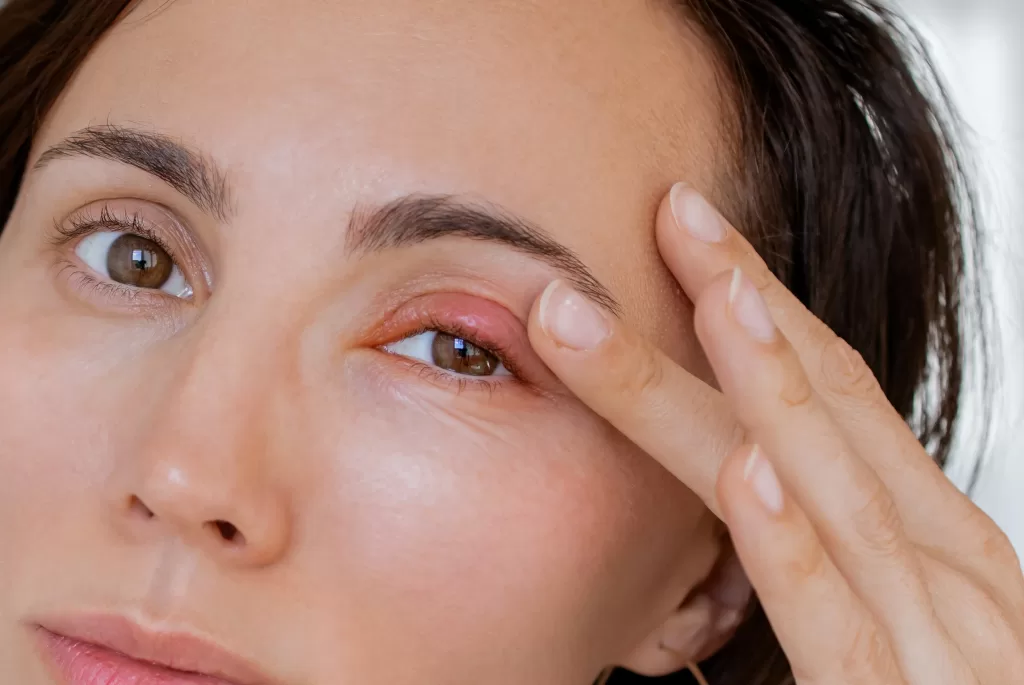
Symptoms of Blepharitis
Some symptoms you may experience with blepharitis can include:
- Burning or itchy eyes
- Sticky eyes when waking
- Symptoms that are worse in the morning
- Dandruff/flakey skin on the eyelids
- Watery and/or dry eyes
- Intolerance of contact lenses
- Red and swollen eyelids
- A gritty sensation in the eyes, like something is inside them
Causes of blepharitis
There are many causes of blepharitis, but some of the most common are:
- Infection: This can be from a bacteria, virus, fungus, or mite.
- Seborrhoeic dermatitis: This is a condition that can affect other skin on the body and it usually leads to crusting, dandruff/flakey skin, and red and irritated skin due to a yeast infection.
- Rosacea: This commonly affects the nose and cheeks, but can also affect the eyelids.
- Allergy: The eyelids can react to mascara, eyeliner, sunscreen, cleansers, toners, contact solution, and other ingredients.
- Blocked oil ducts: These can also lead to a stye or chalazion.
Impact on Vision
Blepharitis is unlikely to affect your vision long term and is generally considered a mild condition. However, it can recur for long periods of time and thus can greatly affect your life if left untreated.

Treatment Options
Treatment depends on the underlying cause. Commonly used treatments are topical or oral antibiotics, antifungals, lubricating eye drops, and removing the allergen causing the condition. Other general advice for all types of blepharitis includes:
- Warm compress: Helps by removing crusty and flakey skin while also opening blocked glands. Soak a makeup pad or cloth in warm water and then apply to closed eyes for 5-10 minutes, making sure it isn’t too hot because the skin of the eyelid is very sensitive to burns. Do this 2-5x per day when your blepharitis is worse. You may need to do it 1x per day long term to prevent blepharitis if you suffer from it long term.
- Baby shampoo: Helps by removing debris from the eyelid margin. Dilute baby shampoo 1:10 in water and then dip a cotton bud into the solution and wipe the eyelid margins gently. It doesn’t need to be vigorous or firm because the eyelid is delicate. This is done 1-2x per day.
- Eyelid massage: Helps by opening blocked glands. This is done gently 1-3x per day in a circular way with your fingertips.

Additional advice
There is also some evidence that Omega-3 supplements can help with blepharitis. When you have a flare-up of blepharitis, it is best to avoid all possible irritants in and around the eyelids, so it’s best to avoid eye makeup and contacts. Most blepharitis improves within a few days, but in some instances, it can linger for months or recur as a chronic condition, depending on the underlying cause. If you suffer from blepharitis and require more assistance, see your GP or local optometrist.
Resources and support
Sinus Infection: Symptoms, How Long It Lasts, and When You Need a Doctor
Sinusitis, often called a sinus infection, is one of the most common reasons Australians start to feel wretched for a week or two after a cold. The good news is [...]

Can You Get a Free Medical Certificate in Australia?
An honest answer from a GP: mostly no, but there are some genuinely free routes, and they are worth knowing about. This page explains where free or bulk-billed certificates really exist, why online [...]

Can You Get a Medical Certificate from a Pharmacy or Chemist Warehouse?
Pharmacy Medical Certificates in Australia: Rules, Limits and Costs If you wake up unwell and need proof for work, the local pharmacy can sometimes help. Pharmacists in Australia can [...]

Medically reviewed by Dr Aifric Boylan
MB · BCH · BAO · MICGP · FRACGP · DRCOG · DCH
About Dr Aifric Boylan MB BCh BAO MICGP FRACGP DRCOG DCH Fellow of the Royal Australian College of General Practitioners, Dr Aifric Boylan is a general practitioner with more than 20 years' experience. She graduated in medicine from…
This health information has been clinically reviewed by an Australian doctor. Qoctor health pages are reviewed to support clear, evidence-informed guidance; they do not replace individual medical advice.
Telehealth is not suitable in all medical situations — patients will be advised if an in-person assessment is needed. In an emergency, call 000.