


What is Pitted Keratolysis?
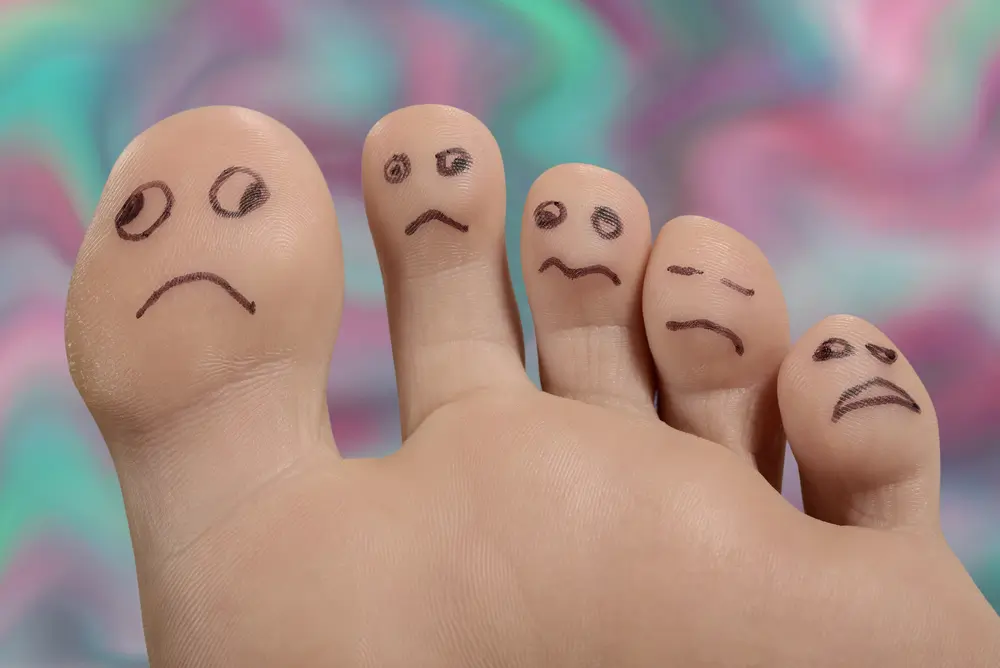
Pitted Keratolysis is a common cause of smelly feet. But unless you look closely you may not realise you have it. Several different bacteria may be to blame, including Corynebacteria, Dermatophilus Congolensis, and Micrococcus Sedentarius.
What are the symptoms of Pitted Keratolysis?
Pitted Keratolysis causes particularly bad foot odour or smelly feet, and on closer inspection you’ll see lots of small “pits” on soles of the feet (tiny round shallow holes in the surface of the skin). Often these are most obvious on the thicker skin of the weight bearing areas. Sometimes these pits join up to form larger lesions.
Who gets Pitted Keratolysis and why does it happen?
Anyone can get it, though it’s more common in men, possibly due to getting sweaty feet from physical work, particularly if wearing non-breathable footwear. The pitting happens because the bacteria produce enzymes which break down the outer layers of skin, and the foot odour is caused by sulphur-based substances released by the bacteria.
How do you treat Pitting Keratolyisis?
To alleviate the pitting and smelly feet, there are a number of things you can do.
Simple self-treatment of Pitting Keratolysis:
A few simple steps may help get rid of Pitting Keratolysis, and should be continued after the infection settles, to prevent it happening again.
- Avoid wearing non-breathable footwear that causes your feet to sweat
- Wear moisture-absorbing insoles- have a few pairs so you can rotate them on a daily basis
- Wear cotton socks, and change them every day
- Try to wear open footwear like sandals or thongs when you can.
- Wash your feet twice a day with soapy water and/or water containing antiseptic (e.g Betadine, Dettol etc)
- If you have very sweaty feet, a roll-on 20% Aluminium antiperspirant may be used on a daily basis also.
- Wash socks in a high temperature machine wash- it has been recommended that temperatures over 60C are needed to kill Corynebacterium from fabric.
Topical Antibiotics
A variety of antibiotic creams can help. They usually need to be applied twice a day for 3-4 weeks to clear the infection fully.
Oral Antibiotics
Oral antibiotics are rarely required, but in severe cases may need to be considered.
There are other causes of smelly feet, including fungal infections. Certain forms of eczema and other infections may cause an unpleasant odour.
If you’re not sure what is causing your foot odour, speak to your GP, podiatrist or pharmacist.
Article Resources

Sinus Infection: Symptoms, How Long It Lasts, and When You Need a Doctor
Sinusitis, often called a sinus infection, is one of the most common reasons Australians start to feel wretched for a week or two after a cold. The good news is [...]

Can You Get a Free Medical Certificate in Australia?
An honest answer from a GP: mostly no, but there are some genuinely free routes, and they are worth knowing about. This page explains where free or bulk-billed certificates really exist, why online [...]

Can You Get a Medical Certificate from a Pharmacy or Chemist Warehouse?
Pharmacy Medical Certificates in Australia: Rules, Limits and Costs If you wake up unwell and need proof for work, the local pharmacy can sometimes help. Pharmacists in Australia can [...]

Medically reviewed by Dr Aifric Boylan
MB · BCH · BAO · MICGP · FRACGP · DRCOG · DCH
About Dr Aifric Boylan MB BCh BAO MICGP FRACGP DRCOG DCH Fellow of the Royal Australian College of General Practitioners, Dr Aifric Boylan is a general practitioner with more than 20 years' experience. She graduated in medicine from…
This health information has been clinically reviewed by an Australian doctor. Qoctor health pages are reviewed to support clear, evidence-informed guidance; they do not replace individual medical advice.
Telehealth is not suitable in all medical situations — patients will be advised if an in-person assessment is needed. In an emergency, call 000.