


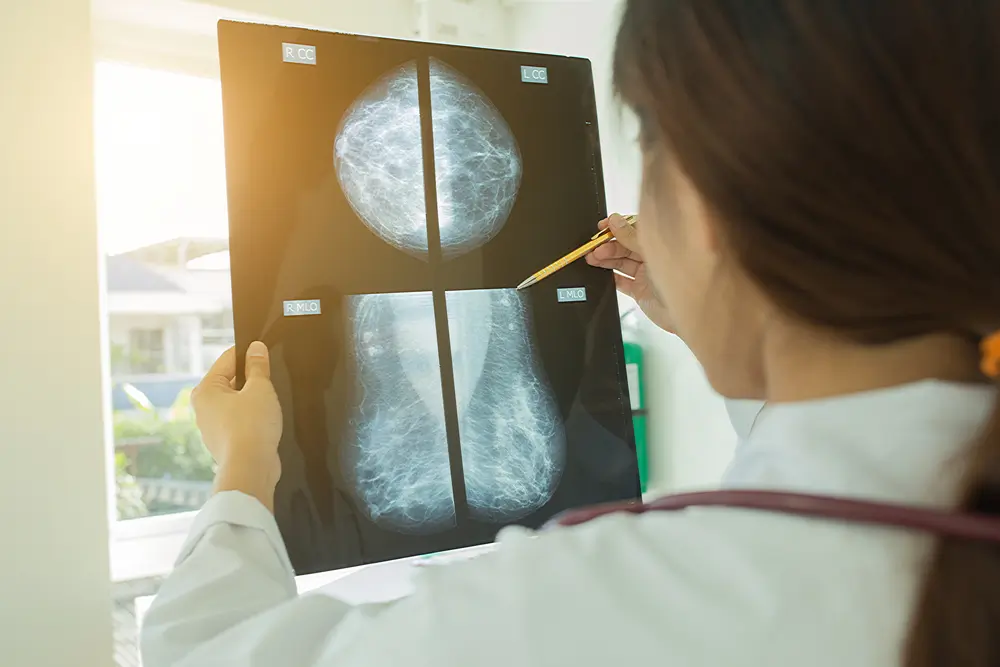
Finding a breast lump can be a scary thing. For many women, the immediate worry is that it could be cancer. The most important thing is to get it checked by your doctor as soon as possible- that way, if it’s benign (non-cancerous), as is usually the case, you can stop stressing about it. In the unlikely event that it is breast cancer, you can get the treatment you need as soon as possible- and early treatment makes a big difference. So, what are the different types of breast lumps women get?
Fibroadenomas
These are very common. A fibroadenoma feels like a smooth firm rounded breast lump, that tends to move around under your fingers when pressed. They are usually painless. Women can have one fibroadenoma, or several fibroadenomas scattered throughout their breasts. While often presenting as a small pea-sized breast lump, they can become quite large in some women (a few centimetres in diameter). They are non-cancerous (benign). Usually no treatment is needed, though they may be surgically removed if they get very large.
Breast Cysts
A cyst is a fluid filled sac that develops in the breast. These are also very common, and again tend to feel relatively smooth and rounded to touch, though perhaps less firm and less mobile than a fibroadenoma. Sometimes they can be tender to press- the tenderness may change at different points of the menstrual cycle. They are not cancerous, and usually nothing needs to be done about them, though now and then they may be drained by a needle if they are very large.
Breast Cancer
Breast cancer can show up in many different ways. It can cause a breast lump, a change in the skin of the breast, nipple changes, pain or discomfort in the breast, enlarged glands in the armpit area, or it may be picked up on routine mammogram screening. Rarely, it may first present as secondary spread to another part of the body. If you have any change in your breast, the best advice is to discuss it with your doctor as soon in possible– most of the time it’s nothing to worry about, but it’s important to be sure.
Hormonal Changes
A lot of women will notice changes in their breasts that fluctuate with their menstrual cycle. There may be increased tenderness and/or lumpiness at various times of the month. It’s worth keeping an eye to see if there’s a pattern. If in any doubt, speak to your GP.
Injury and Infection
It’s quite common for women to experience a breast lump after getting a breast injury- for example, through sport or an accidental bump! There can be bruising within the breast tissue which may feel like a hard lump. Again, it’s best to have this checked to be sure.
It’s also possible to develop an abscess (bacterial infection) in the breast- abscesses tend to be very tender and often need treatment with antibiotics or drainage via a needle. They usually occur in breastfeeding women, and may cause general unwellness such as fever and chills.

What should I do if I notice a breast lump?
If you have a breast lump, you should see your GP as soon as possible. They will usually perform an examination and advise a mammogram (an X-ray of the breasts) and/or an ultrasound of the breasts (as these two types of imaging may pick up slightly different things). You may also need to attend a breast clinic for further assessment.
If you’d like to know more about breast lumps there is further useful information at the Royal Women’s Hospital website.
Further Patient Resources
Sinus Infection: Symptoms, How Long It Lasts, and When You Need a Doctor
Sinusitis, often called a sinus infection, is one of the most common reasons Australians start to feel wretched for a week or two after a cold. The good news is [...]

Can You Get a Free Medical Certificate in Australia?
An honest answer from a GP: mostly no, but there are some genuinely free routes, and they are worth knowing about. This page explains where free or bulk-billed certificates really exist, why online [...]

Can You Get a Medical Certificate from a Pharmacy or Chemist Warehouse?
Pharmacy Medical Certificates in Australia: Rules, Limits and Costs If you wake up unwell and need proof for work, the local pharmacy can sometimes help. Pharmacists in Australia can [...]
Medically reviewed by Dr Richard Bennett
This health information has been clinically reviewed by an Australian doctor. Qoctor health pages are reviewed to support clear, evidence-informed guidance; they do not replace individual medical advice.
Telehealth is not suitable in all medical situations — patients will be advised if an in-person assessment is needed. In an emergency, call 000.